
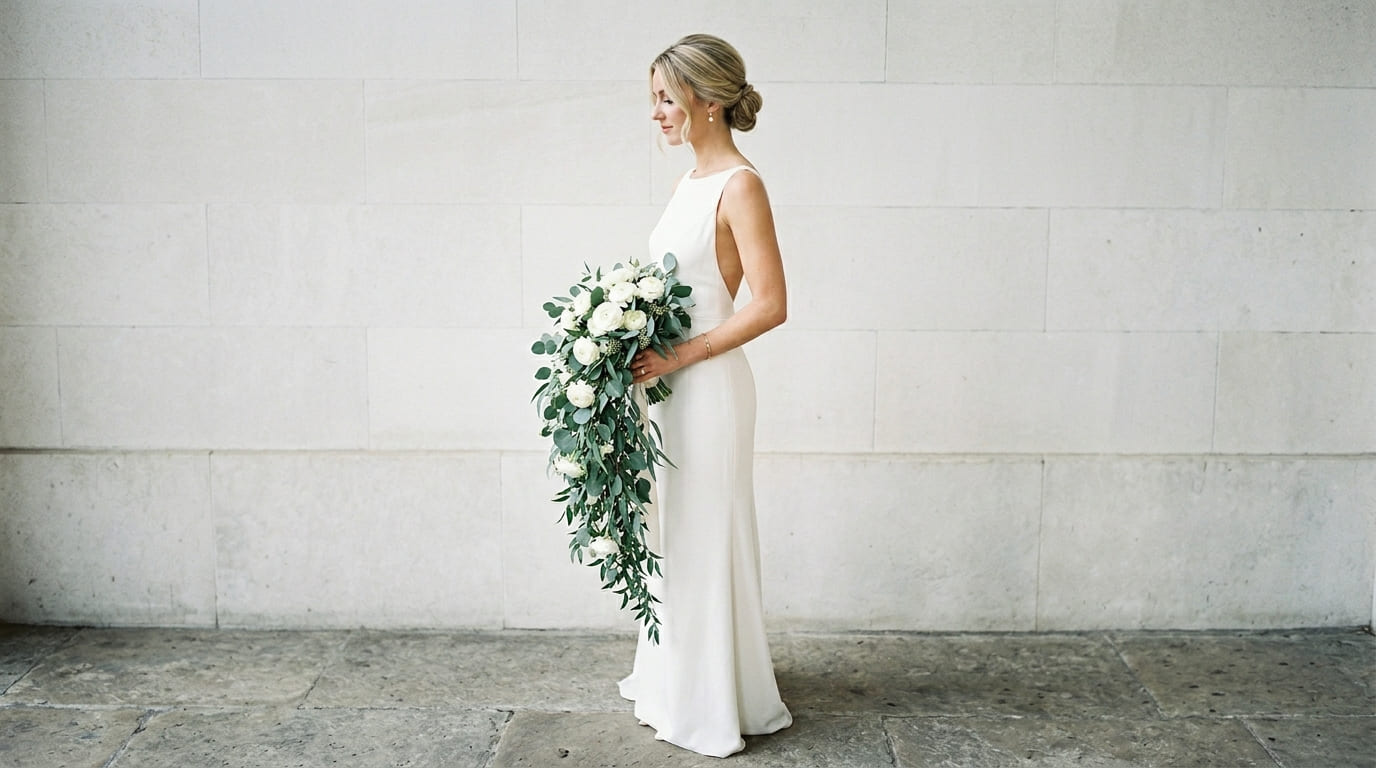
You've seen them in royal weddings, celebrity ceremonies, and all over Pinterest. Cascading bridal bouquets are the dramatic, flowing arrangements that create that "wow" moment when the bride walks down the aisle.
What Is a Cascading Bouquet?
A cascading bridal bouquet (also called a "shower bouquet" or "waterfall bouquet") is characterized by flowers and greenery that flow downward from a central focal point, creating an elongated, vertical shape (typically 18-36 inches in total length).
Think of it this way: If a traditional round bouquet is a cupcake, a cascading bouquet is a layered wedding cake—vertical, dramatic, and impossible to ignore.
How to Hold a Cascading Bouquet (The Right Way)
- Position your hands: Place both hands at the base of the central cluster.
- Grip gently: Don't strangle the stems—a light grip allows the cascade to flow naturally.
- Angle: Tilt the top of the bouquet slightly toward your body (about 15-20 degrees).
Fresh vs. Silk Cascade Bouquet Dilemma
Fresh Cascading Bouquets: The Challenges
- Weight: Fresh cascades can weigh 3-5 pounds (tiring to hold).
- Wilting: Begin to droop within 2-4 hours (especially in heat).
- Cost: Require expert florist assembly ($300-600+).
Silk Cascading Bouquets: The Modern Advantage
- Weight: 60% lighter than fresh (comfortable to hold all day).
- Durability: Flowers don't shift or fall; maintains shape through ceremony and reception.
- Cost: 40-60% less expensive than fresh cascades.
"I was skeptical about silk flowers, but after seeing my cascade bouquet in person, I was sold. It didn't wilt during my 8-hour wedding day, and I still have it displayed in my home 3 years later."
Final Thoughts
A cascading bridal bouquet is more than just flowers—it's a statement piece that defines your bridal aesthetic. With premium silk, it becomes a story that lasts far beyond 24 hours.


